





Faster detection & response
System-triggered alerts on a single pane of glass cut the time between something happening and a team acting on it.
[USE CASE - 03]
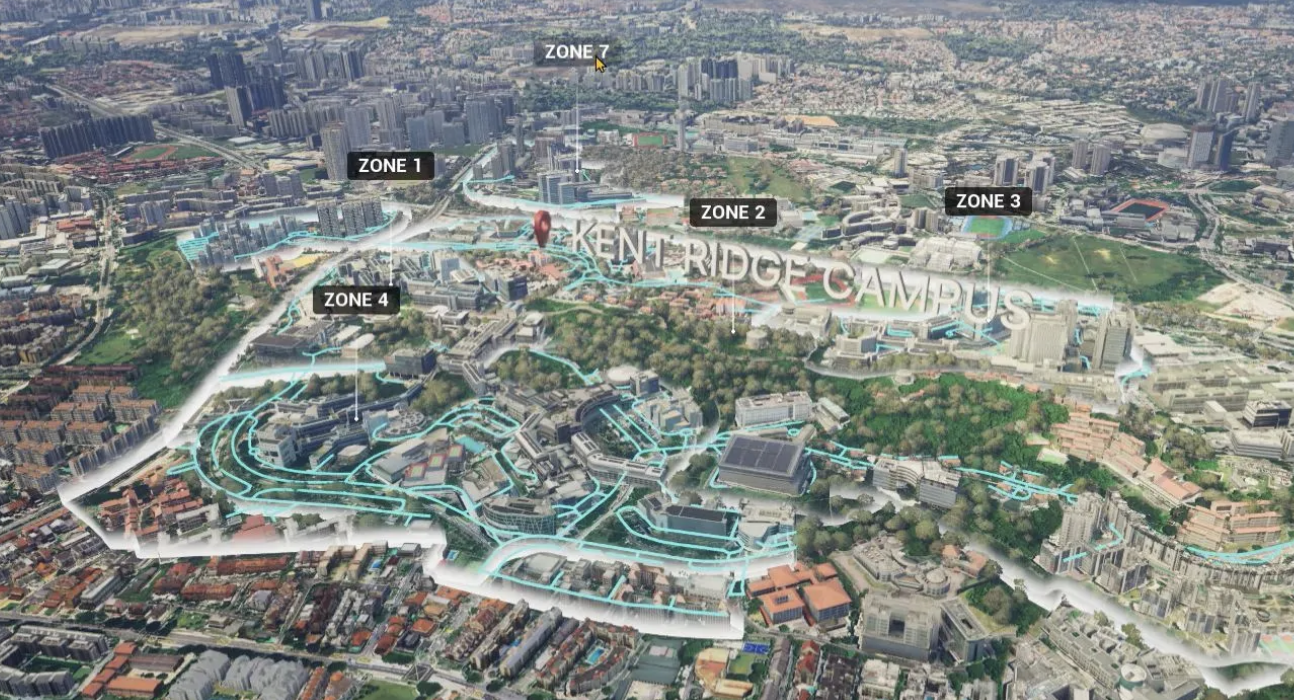
An Integrated Operations Centre that unifies FM, security, and safety — turning system-triggered alerts, work orders, and asset data across a campus into a single live operating view.
[OVERVIEW]
Large campuses and estates often run across disconnected systems — FM, security, safety, CCTV, utilities, alarms, and work orders each sit in their own tool. When something happens, operators stitch the picture together by hand across screens, making it harder to see what is going on, judge what matters, and respond quickly.
The NUS Integrated Operations Centre brings those domains into one operating layer. Built on the 24K Common Data Platform, it unifies FM, security, and safety into a single interface — a single pane of glass where system-triggered alerts, automated fault ticketing, and live asset data come together for swift, insight-driven decisions.
[IMPACT]
System-triggered alerts on a single pane of glass cut the time between something happening and a team acting on it.
FM, security, and safety work from one shared picture, so coordination happens in the same view instead of across tools.
Automated end-to-end ticketing moves faults from alert to assignment without the manual steps that slow response.
Eight systems and 24,000 data points feed one operating picture, so nothing important sits unseen in a silo.
10,000 analytic points turn day-to-day operations into trends that sharpen decisions over time.
A holistic ecosystem of automation, situation awareness, and swift response keeps the campus running as demands shift.
Real-time intelligence
One integrated platform